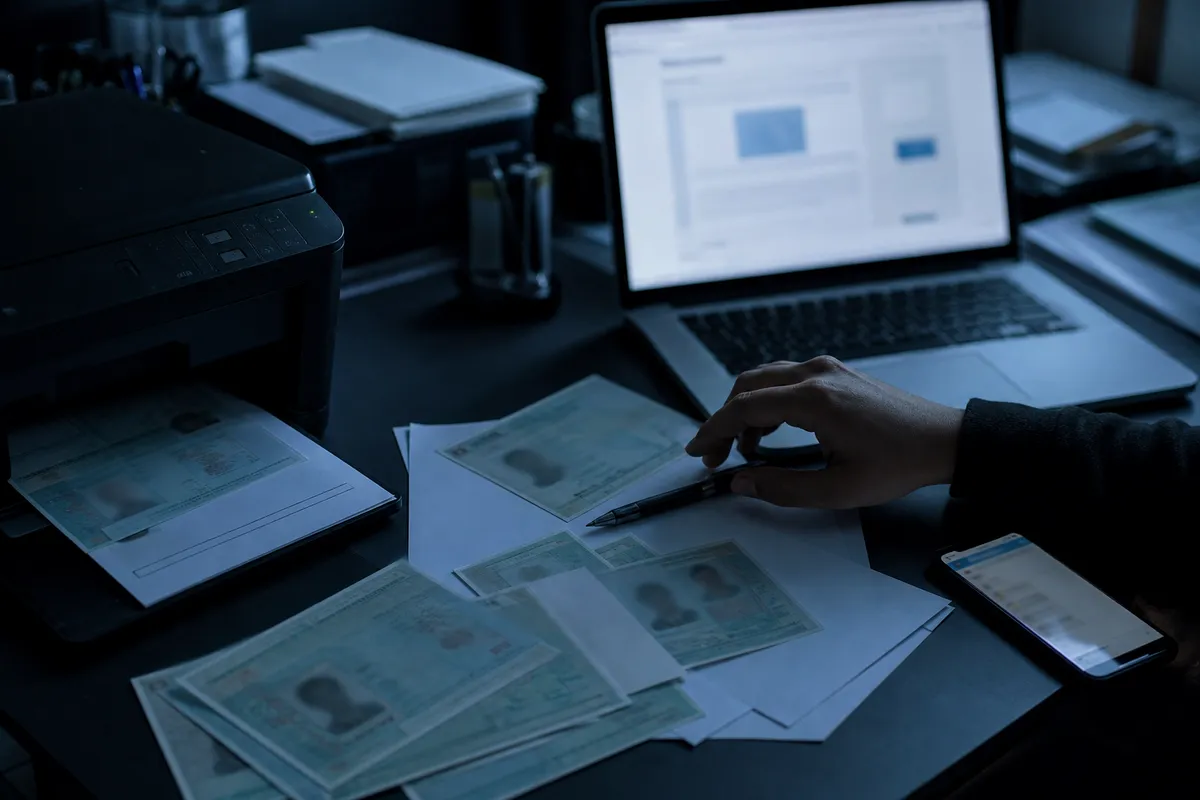
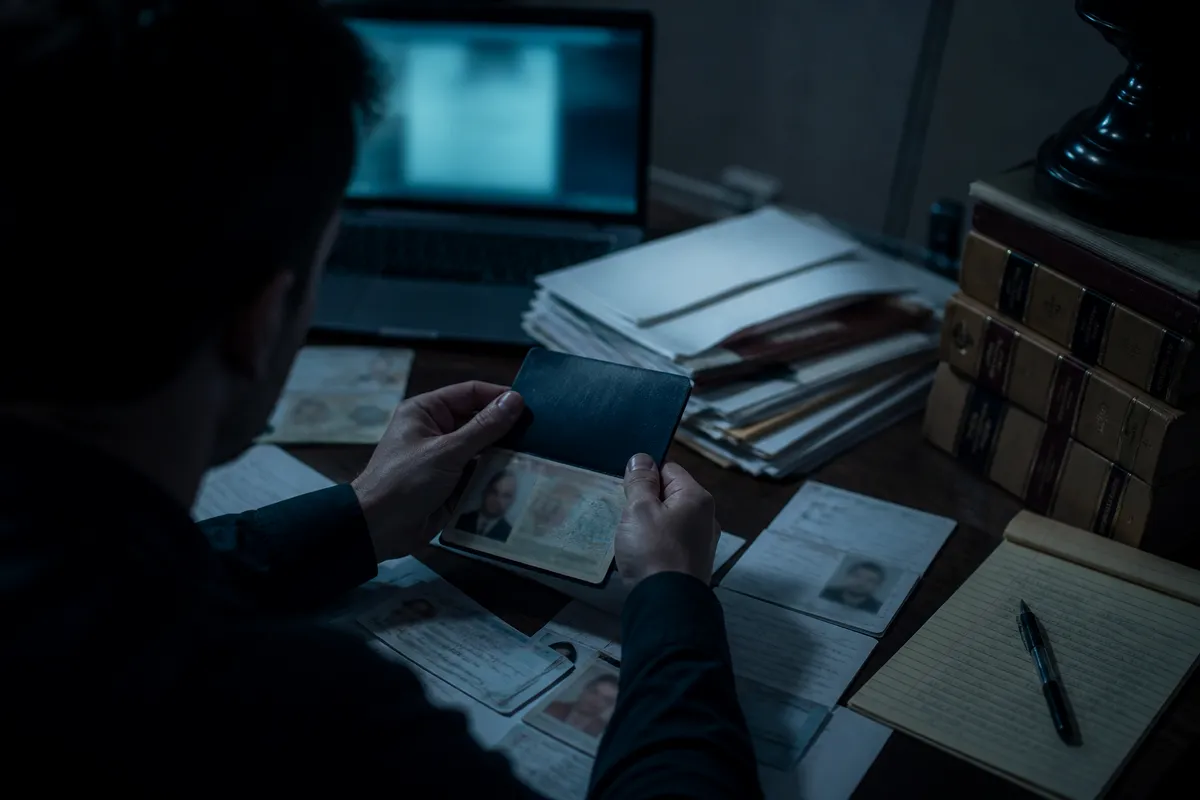
Fake Passports on the Dark Web - Dangers and Risks
This guide is for adults concerned about passport fraud, detailing the dangers and preventive measures against dark web exposure.
Fake passports on the dark web include counterfeit, altered, fraudulently obtained, or misused genuine travel documents (1). On two studied markets, about 80% of identity-related listings were digital files rather than physical documents (2); purchasing them can expose supplied personal data (3), enable identity fraud, and result in criminal charges (4) (5).
What “Fake Passports on the Dark Web” Actually Means
Fake passports on the dark web encompass several categories: counterfeit, altered, stolen, fraudulently obtained, and digitally fabricated passports. Understanding these distinctions is crucial for recognising the risks involved.
Counterfeit passports are unauthorized reproductions of genuine documents, while altered passports are genuine documents that have been tampered with to misrepresent identity (1). Stolen passports typically refer to genuine documents that have been unlawfully obtained, and fraudulently obtained passports are genuine documents acquired through deceitful means. Digitally fabricated passports, on the other hand, are created entirely using graphic design software and do not have a physical counterpart.
It's important to note that many listings on the dark web may not involve actual physical travel documents. Instead, they often consist of identity data, scans, or templates. A forensic study of two major dark web markets found that approximately 80% of identity-related listings were digital products, such as Photoshop templates or "fullz" (complete identity profiles), rather than usable physical documents (2).
The following table provides a compact classification of document types, their typical misuse, and associated risks:
| Document Type | Typical Misuse | Risk to Identity Owner |
|---|---|---|
| Counterfeit Passport | Travel, identity fraud | Prosecution, financial loss |
| Altered Passport | Identity theft, illegal activities | Criminal charges, loss of legitimate ID |
| Stolen Passport | Fraudulent transactions | Identity theft, financial implications |
| Fraudulently Obtained Passport | Accessing services under false identity | Legal repercussions, financial liability |
| Digitally Fabricated Passport | Online scams, identity theft | Exposure of personal data, legal issues |
The risk is heightened when personal information is supplied for the creation of these documents, as this can lead to identity fraud and other criminal activities (3). It is advisable to remain vigilant and informed about the potential dangers associated with the dark web and passport fraud.
How Dark-Web Passport Offers and Scams Operate
The dark web operates through an intricate ecosystem characterised by anonymity and secrecy. Listings for fake passports can typically be found on various platforms that allow sellers to maintain anonymity while buyers seek illicit documents. Communication between buyers and sellers is often encrypted, ensuring that transactions remain confidential. Payments are commonly conducted using cryptocurrencies, which further obscures the identities of both parties.
A significant portion of these listings involves intermediaries who facilitate transactions. These intermediaries can act as escrow services, where funds are held until the buyer receives the promised document. However, this system is fraught with risks, as many sellers engage in scams. Common fraudulent practices include recycled images of documents, fabricated reviews to mislead potential buyers, and advance-fee fraud, where sellers request upfront payments without delivering any product.
The prevalence of malware is another concern. Unsuspecting users may download files that appear legitimate but contain malicious software designed to steal personal information. In some instances, sellers may even be operating under the control of law enforcement, using the guise of legitimate businesses to gather intelligence on users attempting to purchase illegal documents.
A forensic study indicated that only a small percentage of listings on dark web markets relate to physical passports, with most offerings being digital products like scans or templates (2). This highlights the risk of receiving non-viable documents. For example, a buyer may find a listing for a UK passport that appears authentic, only to discover it is a sophisticated forgery or a poorly executed digital file (3).
The legal ramifications of engaging with these services can be severe. Under U.S. law, the production or use of fake passports can result in imprisonment for up to 10 years for a first offense (4). The potential for identity theft and other criminal activities is significant, making it crucial for individuals to be aware of the dangers associated with the dark web and counterfeit passports.
In summary, the dark web offers a breeding ground for scams related to fake passports, with many sellers employing deceptive tactics to exploit unsuspecting buyers. Understanding this ecosystem is vital for anyone concerned about identity fraud and the risks of engaging in illegal online transactions.
What Criminals Can Do With Stolen Passport Data
Criminals can exploit stolen passport data in various ways, leading to significant risks for individuals. Identity theft is one of the most common outcomes, where personal information, such as names and addresses, is used to open fraudulent accounts. A leaked scan of a passport may be combined with other data, enabling the creation of synthetic identities for illicit purposes.
Fraudulent account opening is particularly prevalent in the financial sector. Criminals can use stolen passport details to bypass Know Your Customer (KYC) checks, allowing them to establish bank accounts or cryptocurrency wallets without revealing their true identities. For instance, a criminal may acquire a passport scan, use it alongside a fake address and a selfie, and successfully open an account to launder money (6).
SIM swapping is another tactic employed by criminals. By using stolen passport data, they can convince mobile providers to transfer a victim's number to a new SIM card. This grants them access to the victim's accounts, often leading to further identity theft and financial loss.
Social-engineering attacks are also facilitated through stolen passport data. Criminals may impersonate individuals to extract more sensitive information, such as bank details or passwords, from unsuspecting victims. This can lead to a cycle of fraud that is difficult to trace.
Stolen passport data can also support attempts to bypass age or identity checks, particularly in regulated industries like alcohol or online gaming. For example, a criminal may use a stolen passport to create a fake identity that allows them to purchase restricted items or access services meant for older individuals.
It's important to note that a passport scan alone does not automatically enable international travel. However, when combined with other personal information, such as an address, a selfie, or a compromised account, it can facilitate various fraudulent activities.
Hypothetical Scenarios
Leaked Scan for Account Fraud: A criminal obtains a leaked passport scan and uses it to create a fake identity. They open a bank account, deposit fraudulent checks, and withdraw cash, leaving the victim unaware until significant financial damage has occurred.
Stolen Physical Passport: A victim reports their passport stolen. The thief uses the passport to travel internationally, presenting it at border control. Although the passport's theft is reported, the criminal may have already used it for illicit purposes before the victim's report triggers any action (7).
Understanding these risks is crucial for individuals concerned about identity theft and passport fraud. Awareness of how stolen passport data can be exploited can lead to proactive measures, such as monitoring financial accounts and reporting suspicious activities promptly.
Why Dark-Web Passports Often Fail Verification
Dark-web passports frequently fail to pass verification checks due to a combination of technological safeguards employed by border authorities and the inherent weaknesses of counterfeit documents. Various methods are used to assess the authenticity of passports, including machine-readable zones (MRZ), electronic chips, database checks, biometrics, and consistency checks.
The MRZ, typically found at the bottom of a passport's data page, contains encoded information about the document holder. Authorities scan this zone to extract data quickly and check it against national databases. Electronic passports, or ePassports, contain embedded chips that store biographical data and a digital signature tied to government security certificates, as specified in ICAO Doc 9303. These chips enable verification of the document's origin and integrity (8) (9).
Biometric verification adds another layer of security. It involves comparing a traveller's biometric data, such as fingerprints or facial recognition, against the information stored in the passport. This process aims to ensure that the individual presenting the passport is indeed its rightful owner.
In addition, INTERPOL maintains the Stolen and Lost Travel Documents (SLTD) database, which contains approximately 138 million records. In 2023, officials checked this database 3.6 billion times, resulting in over 232,000 matches with documents reported lost or stolen (10). This extensive database allows border authorities to quickly identify fraudulent or previously reported documents.
Counterfeit passports may visually resemble genuine ones, but they often lack the critical features that can withstand thorough scrutiny. For instance, a counterfeit document might appear convincing at first glance but fail biometric checks or not match the data stored in the chip. This disparity between visual similarity and actual verification is a significant reason why dark-web passports are often ineffective.
The risks associated with dark-web passports extend beyond simple rejection at borders. Possession of a counterfeit passport can lead to severe legal consequences, including imprisonment of up to 10 years for first offenses under U.S. law (4). Therefore, relying on dark-web purchases for travel documents is fraught with danger, as the likelihood of detection and prosecution is high.
Legal Consequences of Buying, Possessing, or Using a Fake Passport
Engaging with fake passports has serious legal implications. The legal distinction between merely viewing a listing, purchasing, possessing, and using a counterfeit passport is crucial. Simply browsing listings may not constitute a crime; however, any attempt to buy, possess, or use a fake passport is illegal and can lead to severe penalties.
In the United States, under 18 U.S.C. § 1543, knowingly making, altering, using, or attempting to use a false or forged passport can result in a maximum penalty of 10 years' imprisonment for a first or second ordinary offense. This penalty increases to 20 years if the offense is connected to drug trafficking and up to 25 years if used to facilitate international terrorism (4).
In the UK, the Identity Documents Act 2010 stipulates that possessing or using a false identity document can lead to a maximum penalty of 10 years' imprisonment. This includes any document that is intended to mislead authorities, which encompasses counterfeit passports, as well as other identification documents (1).
Possessing stolen identity data also carries significant penalties. Under 18 U.S.C. § 1028, federal crimes can include knowingly transferring or possessing unlawfully produced identification documents, with some offenses punishable by up to 15 years in prison (5).
Examples of legal consequences illustrate the severity of these offenses. In a recent U.S. case, two defendants received federal prison sentences of 120 and 90 months for operating an illegal counterfeit passport scheme, using personal information from over 80 individuals (11). Another case involved a defendant who received a 48-month sentence for using counterfeit passport cards to cash forged checks (12).
It is essential to note that laws and penalties vary significantly by country. Readers are encouraged to seek qualified legal advice if facing real cases involving counterfeit documents. Understanding the risks associated with fake passports can help individuals avoid severe legal repercussions and protect their identities.
Warning Signs Your Passport Data May Be Compromised
Detecting compromised passport data early can mitigate risks associated with identity theft and fraud. Key indicators include:
- Unexpected identity-verification messages: Alerts from financial institutions or service providers regarding identity checks that were not initiated by the user.
- Unfamiliar financial accounts: Discovery of accounts, loans, or credit cards that the individual did not open.
- Changes in mobile services: Notifications regarding modifications to mobile accounts, such as SIM swaps, that the individual did not authorise.
- Government correspondence: Unsolicited letters or emails from government agencies regarding passport issues or identity verification.
- Failed verification attempts: Notifications of unsuccessful attempts to access accounts or services that require identity verification.
- Breach notifications: Alerts from organisations that hold passport copies, indicating a data breach that may expose personal information.
It's essential to note that not finding alerts on the dark web does not guarantee the safety of personal data. Many compromised credentials may not yet appear on these platforms, making vigilance crucial.
Five-Minute Triage Checklist
- Review financial accounts: Check for unfamiliar transactions, accounts, or charges. Report any suspicious activity immediately.
- Monitor credit reports: Obtain a free credit report from major bureaus and review it for unfamiliar accounts or inquiries.
- Update passwords: Change passwords for critical accounts, especially those linked to sensitive information. Use strong, unique passwords.
- Enable multi-factor authentication (MFA): Activate MFA on accounts where available to add an extra layer of security.
- Report to authorities: If suspicious activity is confirmed, report it to local law enforcement and relevant financial institutions. Consider filing a report with the Federal Trade Commission (FTC) at IdentityTheft.gov for further assistance.
Taking these steps can help the reader address potential breaches effectively and safeguard their identity against further risks.
What to Do If Your Passport or Passport Scan Is Exposed
Immediate action is crucial if a passport or its scan is compromised. The response plan should be prioritised based on the nature of the exposure—whether it's a physical passport, a digital scan, or suspected fraudulent use.
Steps for Reporting a Lost or Stolen Physical Passport
- Report to the Issuing Authority: Notify the relevant passport authority immediately. In the U.S., this can be done online, and it usually cancels the passport within one business day, rendering it permanently invalid even if recovered (7).
- Preserve Evidence: Keep any documentation or communications related to the loss or theft. This may help in investigations or further claims.
- Contact Local Law Enforcement: File a police report, especially if the passport has been stolen. This can provide an official record of the incident.
Actions for a Compromised Passport Scan
- Secure Email and Mobile Accounts: Change passwords for accounts that may have been linked to the exposed scan. Ensure that these passwords are unique and complex.
- Enable Multi-Factor Authentication (MFA): Activate MFA for added security on sensitive accounts. This extra layer can help prevent unauthorised access (13).
- Monitor Financial Institutions: Contact banks or credit card companies to alert them of the potential risk. They may suggest additional security measures or monitoring.
Addressing Suspected Fraudulent Use
- Change Reused Passwords: If the same passwords were used across various accounts, change them immediately to prevent further unauthorised access.
- Monitor Credit Reports: Regularly check credit reports for unfamiliar accounts or inquiries. Free annual reports can be obtained from major credit bureaus (13).
- Report Identity Theft: If fraudulent activities are detected, report to local authorities and consider filing a report with the Federal Trade Commission (FTC) via IdentityTheft.gov. This can help in managing the aftermath of identity theft.
Important Resources
- National Passport Authorities: Directly report lost or stolen passports to national agencies.
- Local Police: Involve law enforcement for theft reports.
- Identity-Theft Reporting Services: Use official services like IdentityTheft.gov for guidance on managing identity theft.
- Credit Bureaus: Contact Equifax, Experian, or TransUnion for credit monitoring and freezes.
Taking these steps promptly can significantly mitigate the risks associated with passport fraud and identity theft.
How to Reduce the Risk of Passport Identity Theft
Sharing passport copies carries inherent risks that can lead to identity theft or passport fraud. To mitigate these risks, consider the following recommendations:
Share Only When Necessary: Only provide copies of your passport when absolutely required. Assess whether the recipient truly needs this information.
Confirm the Recipient and Retention Policy: Verify the identity of the individual or organisation requesting the passport copy. Understand their policy on data retention and how they will secure your information.
Use Secure Upload Channels: Opt for secure platforms when sharing documents. Avoid using unencrypted email, as this can expose sensitive information to interception.
Delete Copies from Exposed Cloud Folders or Devices: If passport copies are stored in cloud services or devices, ensure these are removed after use. Regularly review and clean up storage to prevent unauthorized access.
Watermarking passport copies can add a layer of security, but it must be done cautiously. Watermarks should not obscure essential data or security features required for legitimate identification. Ensure that the requesting organisation accepts this practice.
Before-You-Share Checklist
- Necessity: Is sharing the passport copy essential for the task at hand?
- Recipient: Who is requesting the copy, and can their identity be verified?
- Transfer Method: What secure methods are available for sharing the document?
- Storage Period: How long will the recipient retain the copy, and what is their policy on deletion?
- Deletion Request: After sharing, request confirmation that the document has been deleted from their systems.
By adhering to these guidelines, the reader can significantly reduce the risk of passport identity theft and safeguard personal information from potential exploitation on the dark web.
Risk and Response Matrix for Passport Exposure Types
| Exposure Type | Likely Harms | Urgency | First Actions |
|---|---|---|---|
| Lost Physical Passport | Identity theft, fraud | High | Report to issuing authority, file police report |
| Stolen Scan | Unauthorized use, identity theft | High | Change passwords, enable MFA, monitor accounts |
| Leaked Passport Number | Fraudulent accounts, identity theft | Medium | Monitor credit reports, report to FTC |
| Confirmed Fraudulent Use | Legal issues, financial loss | Immediate | Report identity theft, contact authorities |
Conclusions
- Act at once. If a passport, scan, or number is exposed, contact the issuing authority before addressing secondary risks.
- Dark-web passport listings may involve counterfeit documents, stolen personal data, payment theft, blackmail, or contact with criminal investigations.
- Secure the email address and mobile account connected to identity checks, replace reused passwords, and activate multi-factor authentication.
- Examine bank, credit, and government communications for activity that does not match the reader’s actions; preserve screenshots and transaction records.
- A clean dark-web search does not prove that passport data remains private, so continued account and credit review still has value.
Next, review Passport for Sale Online - What You Need to Know before responding to any passport seller or advertisement.
Sources consulted
- 1
- Identity and travel document fraud
- 2
- Illuminating the dark web market of fraudulent identity documents and personal information: An international and Australian perspective
- 3
- Las Vegas Man Charged With Attempting To Buy A Fake Passport
- 4
- 18 USC 1543: Forgery or false use of passport
- 5
- 18 USC 1028: Fraud and related activity in connection with identification documents, authentication features, and information
- 6
- Creator Of “OnlyFake” Charged And Pleads Guilty To Selling More Than 10,000 Digital Fake Identification Documents
- 7
- Report Your Passport Lost or Stolen
- 8
- ICAO PKD - ePassport Basics
- 9
- ICAO PKD - ePassport Validation
- 10
- Stolen and Lost Travel Documents database
- 11
- New Yorkers sentenced to federal prison for illegal counterfeit passport operation in the Eastern District of Texas as part of Operation Take Back America
- 12
- Florida Man Sentenced To 48 Months In Federal Prison For Using Counterfeit U.S. Passport Cards In Check-Cashing Scheme
- 13
- What To Know About Identity Theft
Stay Informed on Identity Risks
Explore more resources to protect yourself from fraud.